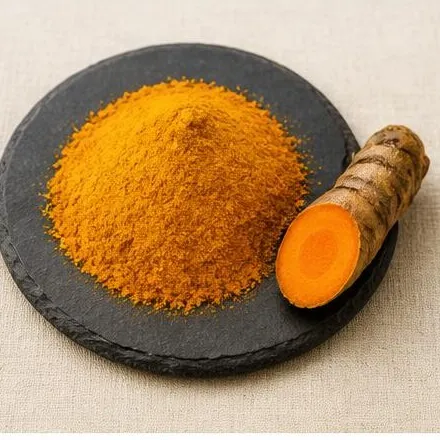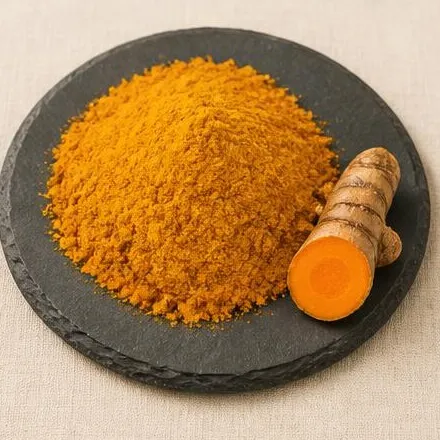
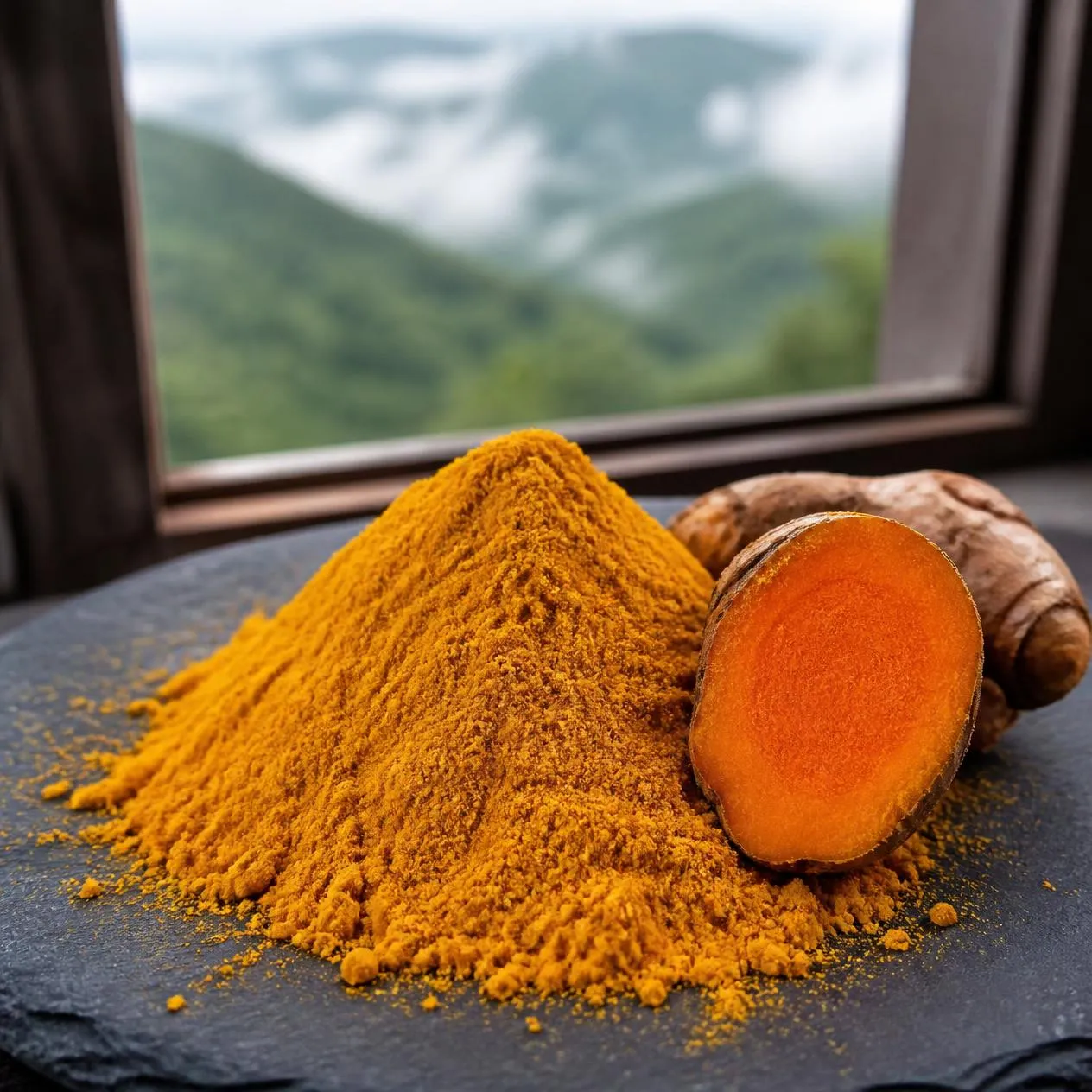
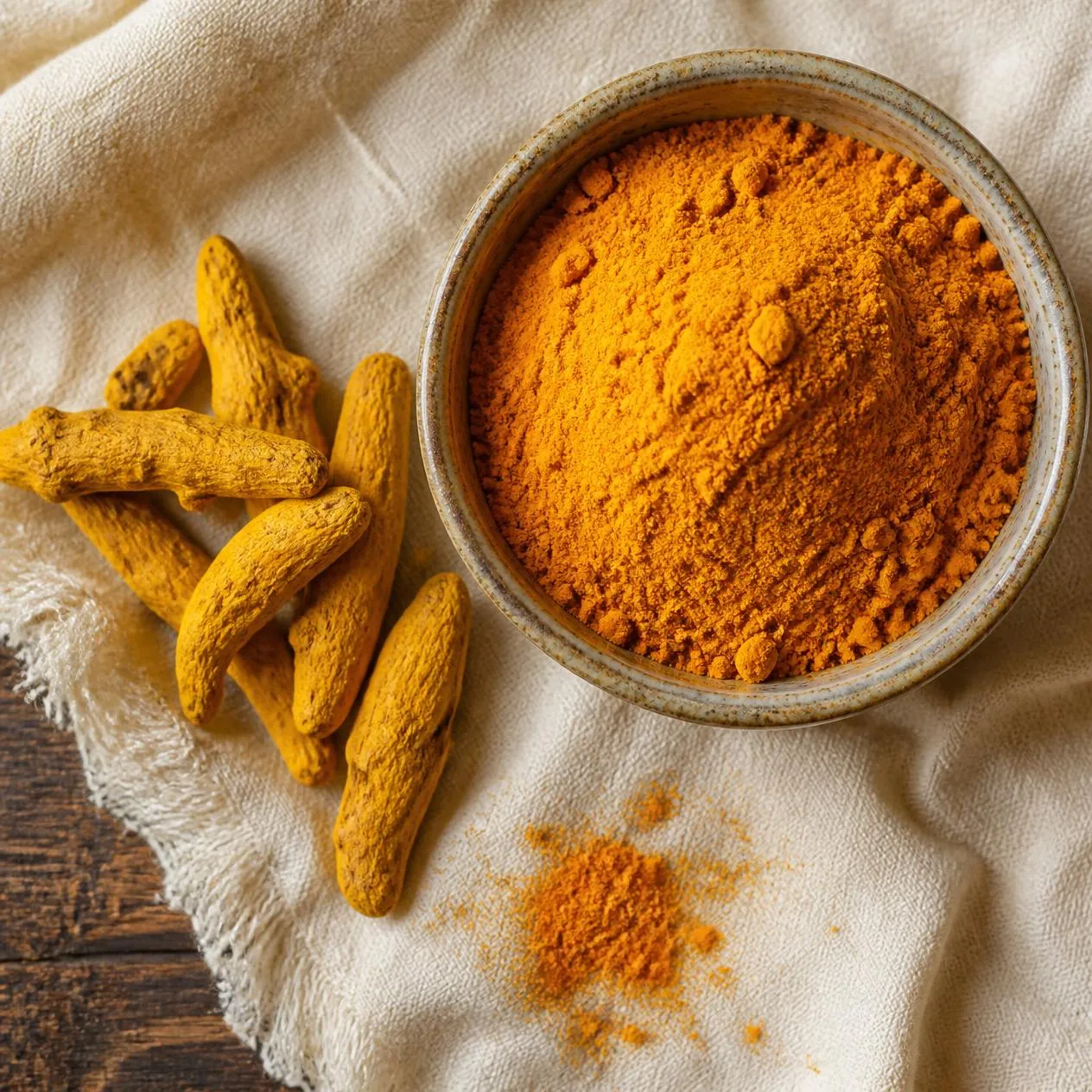
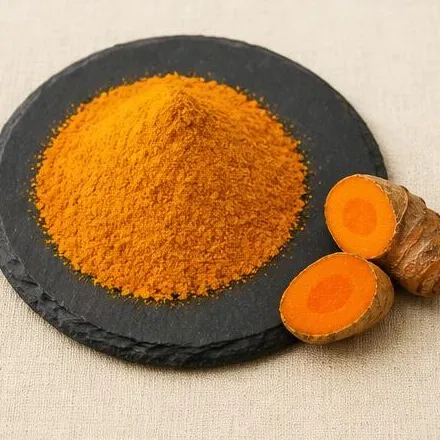
Most turmeric conversations use one word — haldi — for what is really a wide range of crops. The difference between an ordinary powder and Lakadong is not marketing. It is measurable.
Curcumin, in plain language
Curcumin is the compound family that gives turmeric its colour and most of its reputation. It is the part of haldi that researchers study, the number quality buyers ask for, and the reason two powders that look similar can behave very differently.
Ordinary commercial turmeric typically tests at 2–3% curcumin. Turmeric grown around Lakadong village in Meghalaya’s Jaintia Hills tests at 7–12% — three to four times higher, from soil and seed stock rather than any processing trick.
Why the hills matter
Lakadong is a landrace: a variety shaped over generations by one place. The Jaintia Hills sit at altitude, with organic-matter-rich soil, and the crop is grown by smallholders largely without synthetic inputs. Attempts to grow the same seed elsewhere lose potency within a few generations — which is exactly why the origin, not just the name, matters.
In 2024 that origin was formally protected: Lakadong turmeric received Geographical Indication registration No. 741. A GI tag works like a signature — turmeric sold as Lakadong is supposed to come from these hills, the way Champagne must come from Champagne.
What you notice in the kitchen
The first thing is colour: Lakadong turns milk a deep marigold where ordinary haldi manages pale yellow. The aroma is stronger and more resinous. And because the potency is higher, you use less — start with half your usual quantity and adjust.
Two pieces of traditional kitchen wisdom hold here: turmeric is fat-soluble, so it does its best work cooked in ghee or oil or stirred into milk, and a pinch of black pepper is the classic companion — piperine helps the body absorb curcumin.
An honest note on price
Lakadong costs more than commodity turmeric, and it should: it yields less, travels further, and is grown by hill farmers we buy from directly. Per teaspoon of actual curcumin, the mathematics usually favours the stronger powder.
Traditional uses described here are general knowledge about turmeric as a food, not medical advice.